
"2 kinds"
20000 article(s) found

Understand the coffee feelings of China and France (2)
France once heard that France once drank less coffee because of a shortage of coffee, and immediately saw more people napping. It may seem like an exaggeration, but it is true that the French are addicted to coffee. When the Gulf War broke out in 1991, France was also one of the countries participating in the war. some ordinary people in China worried that the war would affect the supply of daily necessities and rushed to supermarkets to buy them. Even the TV station was alarmed by this, when

Detailed Analysis of the components of Coffee beans in Coffee Encyclopedia
★ volatile compounds: volatile compounds are the main source of coffee flavor, especially important for coffee quality. There are many kinds of volatile substances in coffee, and their existence will affect the aroma quality of coffee. Its main source is derived from non-volatile substances in raw beans which are disconnected or derived after reaction in the process of roasting. The role of thermal decomposition, other reactions, or compositions, such as sugar.

The usage of Philharmonic pressure-what is the price of Philharmonic pressure suitable for which kind of coffee beans?
1. What kind of ground coffee powder should I use? We recommend fine grinding, but it is slightly thicker than the Italian machine. Why is 80 ℃ water recommended for brewing coffee? From coffee lovers to coffee professionals, all of our tasters like 80 ℃. Because this temperature can brew smooth and rich coffee, hotter water will increase the bitter and sour taste by 3. 5%. How can I put

How do you make mocha coffee? What is the right way to do mocha coffee?
For more information on coffee beans, please follow the practice of mocha coffee in the coffee workshop (Wechat official account cafe_style). Mocha coffee is the oldest kind of coffee in the world. In fact, it is a variant of Italian latte. It has a unique chocolate taste, what is the practice of mocha coffee? Practice: 1. Fill the brewed coffee with
Fine Coffee: a detailed Analysis of the components of Coffee beans
★ volatile compounds: volatile compounds are the main source of coffee flavor, especially important for coffee quality. There are many kinds of volatile substances in coffee, and their existence will affect the aroma quality of coffee. Its main source is derived from non-volatile substances in raw beans which are disconnected or derived after reaction in the process of roasting. The role of thermal decomposition, other reactions, or compositions, such as sugar.
What is a coffee cup test?
The quality of coffee is judged by the sense of taste, which is called the "coffee cup test", while the person who evaluates it is called the "anatomist".
Professional coffee roasting knowledge coffee grinding process
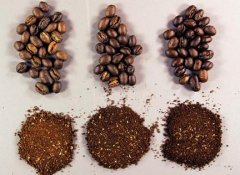
(1) the principle of grinding, generally speaking, a good grinding method should include the following four basic principles: 1, the degree of grinding suitable for cooking method should be selected; 2, the temperature of cattle produced during grinding should be low; 3, the powder should be uniform after grinding; 4, it should be ground before cooking. No matter what kind of grinder is used, it is bound to generate heat by friction in operation. Most of the excellent substances are highly volatile.
WASH washing treatment H _ 2 honey treatment NATURE sun treatment 90 + treatment
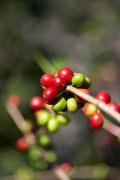
W2, H2, N2: it can be understood as the traditional way of processing raw beans, and 90 + also regards them as the distinction of taste. Ninety Plus thought that coffee itself is a kind of fruit, so he made his own exclusive treatment according to taste (W2), (H2), and (N2). When you understand traditional coffee processing, you will find that a small amount of adjustment can blur the distinction between them. For example, in

Which kind of coffee beans is suitable for brewing? is it okay to use Philharmonic pressure to brew coffee beans?
Professional coffee knowledge exchange more coffee bean information please follow the coffee workshop (Wechat official account cafe_style) 1. What kind of ground coffee powder should I use? We recommend fine grinding, but it is slightly thicker than the Italian machine. Why is 80 ℃ water recommended for brewing coffee? From coffee lovers to coffee professionals, all of our tasters like 80 ℃. Because of this.

Taste mellow Costa Rican Diamond Hill boutique coffee beans grind degree baking degree treatment method simple
Other kinds of Brazilian coffee, such as Rio and Parana, can be produced in large quantities because they do not need too much care. Although the taste is rough, it is a kind of good and cheap coffee. It has its own standard because it is distributed all over the country and its solid quality varies. It has its own standard (NO.2~NO.8 according to the number of sundries, NO.13~NO.19 according to the size of beans, and six grades according to taste).
Detailed Analysis of the components of Coffee beans in the training of baristas
★ volatile compounds: volatile compounds are the main source of coffee flavor, especially important for coffee quality. There are many kinds of volatile substances in coffee, and their existence will affect the aroma quality of coffee. Its main source is derived from non-volatile substances in raw beans which are disconnected or derived after reaction in the process of roasting. The role of thermal decomposition, other reactions, or compositions, such as sugar.

Please go to the cafe like this to raise the bar.
one。 Understanding the history of coffee and the knowledge related to coffee beans has a long history, but the real origin of coffee is that there is no authoritative textual research. The most famous origin of coffee: legend has it that in the sixth century, a shepherd in southwestern Ethiopia found that his sheep suddenly kept jumping around. He looked carefully and found that the sheep only ate a kind of red fruit.
Coffee trees and three kinds of native species
Coffee trees and three kinds of native coffee trees are evergreen shrubs or trees belonging to the Rubiaceae family. Wild coffee trees can grow to a height of 5 to 10 meters, but coffee trees planted on the manor are often cut to a height of less than 2 meters in order to increase fruit and facilitate harvesting. The opposite leaf of the coffee tree is long oval, the leaf surface is smooth, the end branch is very long, the branch is few, and the flower is white.

Brief introduction of planting Market Price of Fine Coffee Bean varieties in St. Roman Manor with ideal acidity
The research center, located about 30 kilometers northeast of the Costa Rican capital San Jose, belongs to the Costa Rican Coffee Association and is a research institution for villa sarchi planting, breeding and quality inspection newly developed by Costa Rica's national coffee breeds. in addition, it also has 10 hectares of experimental plots, planting a number of excellent varieties. Coffee is the main agricultural product in Costa Rica, with an annual output of more than 2 million bags

What kind of cat does Kopi Luwak use? brief introduction of Kopi Luwak.
Follow the caf é (Wechat official account vdailycom) found that the beautiful cafe opened its own shop is the Indonesian musk cat (wild small cats), this cat's diet has coffee beans this is the same, but the coffee beans can not be completely digested, after enzyme treatment in the body and fermentation, there will be a series of chemical reactions (not detailed here), although the beans are still the same

Coffee loading manual, please go to the cafe to raise the bar.
one。 Understanding the history of coffee and the knowledge related to coffee beans has a long history, but the real origin of coffee is that there is no authoritative textual research. The most famous origin of coffee: legend has it that in the sixth century, a shepherd in southwestern Ethiopia found that his sheep suddenly kept jumping around. He looked carefully and found that the sheep only ate a kind of red fruit.

A brief introduction to the Origin, Development, History and Culture of Fine Coffee beans in St. Roman Manor
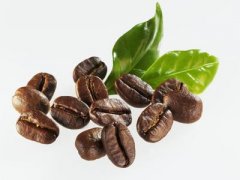
All the coffee trees planted in Costa Rica are Arabica coffee trees. through improvement, the quality of coffee beans is better and more stable. in order to facilitate picking, coffee trees are kept at a height of about 2 meters through continuous pruning. The coffee that people eat is the taste of the seeds in the fruit that are brewed in water. After picking raw coffee beans, the peel, pulp, seed film and sun exposure must be removed.

What kind of utensils do you use to make coffee at home?
If you want to enjoy a good cup of coffee, remember not to begrudge the coffee powder. In addition, the temperature of the water to mix a delicious cup of coffee is very important, the ideal water temperature is 86 ℃. In this way, you can make a cup of delicious coffee. When brewing coffee, we should pay attention to the following points: 1. Boiling will make the coffee bitter, so never boil the coffee. The appropriate brewing temperature should be slightly lower.
A brief introduction to the Origin, Development, History and Culture of Fine Coffee beans in St. Roman Manor
The research center, located about 30 kilometers northeast of the Costa Rican capital San Jose, belongs to the Costa Rican Coffee Association and is a research institution for villa sarchi planting, breeding and quality inspection newly developed by Costa Rica's national coffee breeds. in addition, it also has 10 hectares of experimental plots, planting a number of excellent varieties. Coffee is the main agricultural product in Costa Rica, with an annual output of more than 2 million bags

How does Brazilian Santos Coffee taste? description of the taste and flavor of Brazilian Santos coffee
Professional coffee knowledge exchange more coffee bean information please follow the coffee workshop (Wechat official account cafe_style) Brazilian coffee bean grading | Brazil Santos Stictly Soft extreme temperature and No.2 coffee naming? Brazil is one of the largest coffee producers in the world. It is the largest coffee producer, accounting for 1/3 of the global consumption of all grades and types of coffee.